BenchMIRT: What Are LLM Benchmarks Actually Measuring?
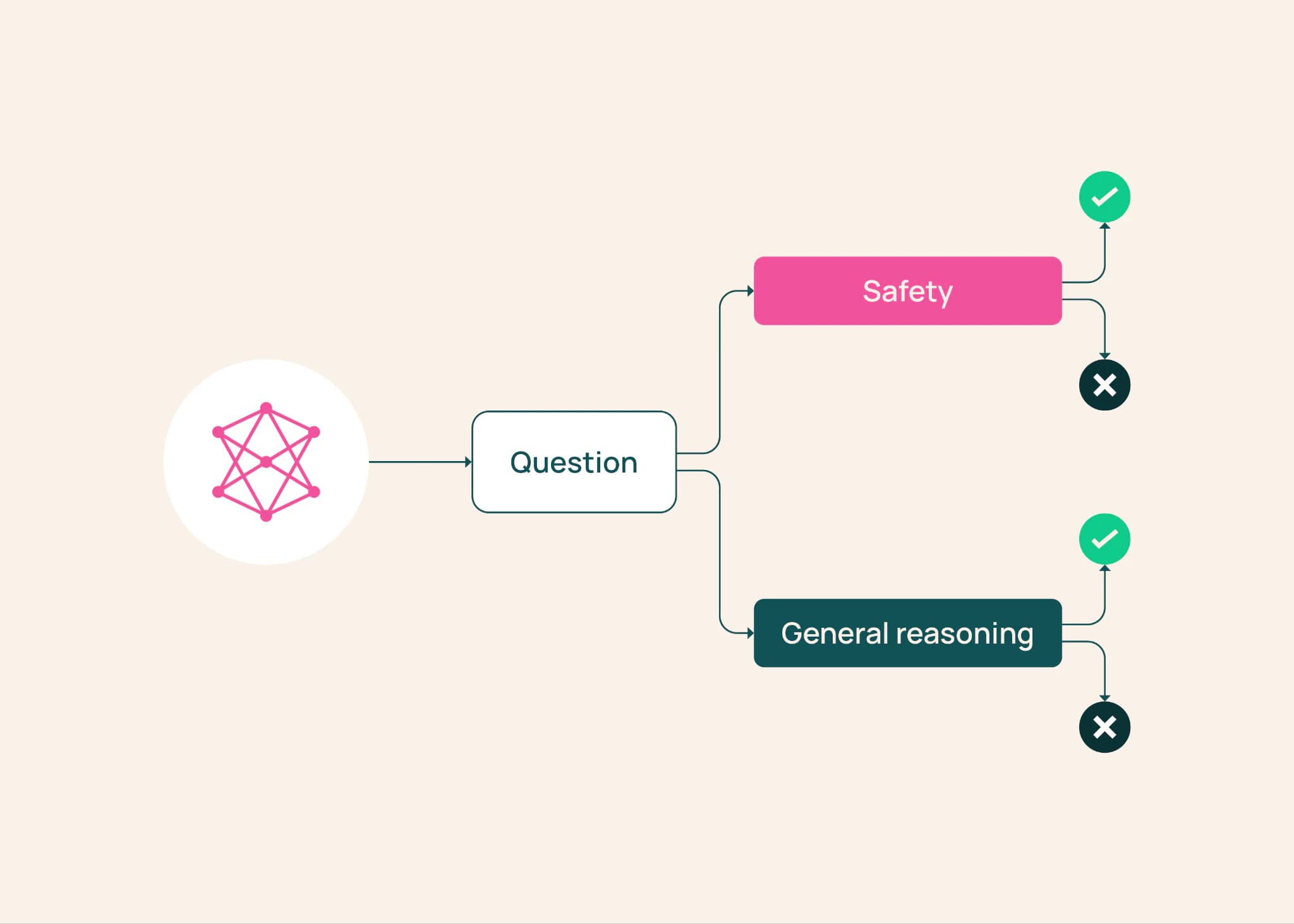
As foundation models approach ceiling scores on traditional standardized evaluations, AI researchers face a fundamental measurement crisis: are benchmarks evaluating true generalized reasoning, or merely memorized test distributions?
BenchMIRT introduces Multi-dimensional Item Response Theory (MIRT) to foundation model evaluation, decomposing benchmark questions into granular psychometric latent traits to uncover what benchmarks actually measure.
···
Key Breakthroughs
1. Psychometric Latent Trait Decomposition
- Item Difficulty & Discrimination Parameters: Evaluates each test item for its statistical power to differentiate between frontier capabilities.
- Contamination & Leakage Detection: Detects synthetic or pre-training data contamination through abnormal response probability curves.
···
2. Adaptive Testing for Frontier Models
- Computerized Adaptive Testing (CAT): Reduces required test questions by 75% while achieving higher measurement confidence intervals than static thousand-question suites.
- Cross-Family Calibration: Calibrates scores across OpenAI, Anthropic, Google, and open-weights models onto an invariant difficulty scale.
···
Technical Specifications & Benchmark Overview
| Metric / Dimension | Specification |
|---|---|
| Framework Name | BenchMIRT |
| Release Date | September 2, 2026 |
| Evaluation Method | Multidimensional Item Response Theory (MIRT) + CAT |
| Compatible Models | All OpenAI, Anthropic, Gemini, DeepSeek, and Llama series |
| Open Source | Apache 2.0 License |
···
Verified Integration & API Usage
pythonimport benchmirt evaluator = benchmirt.Evaluator( models=["claude-3-7-sonnet", "gpt-4o", "gemini-2-0-flash"], benchmark="math-500", adaptive=True ) report = evaluator.run() report.plot_latent_traits()